

✋🏻 Raise Your Right Hand
Court, cows, and confusion—on our property

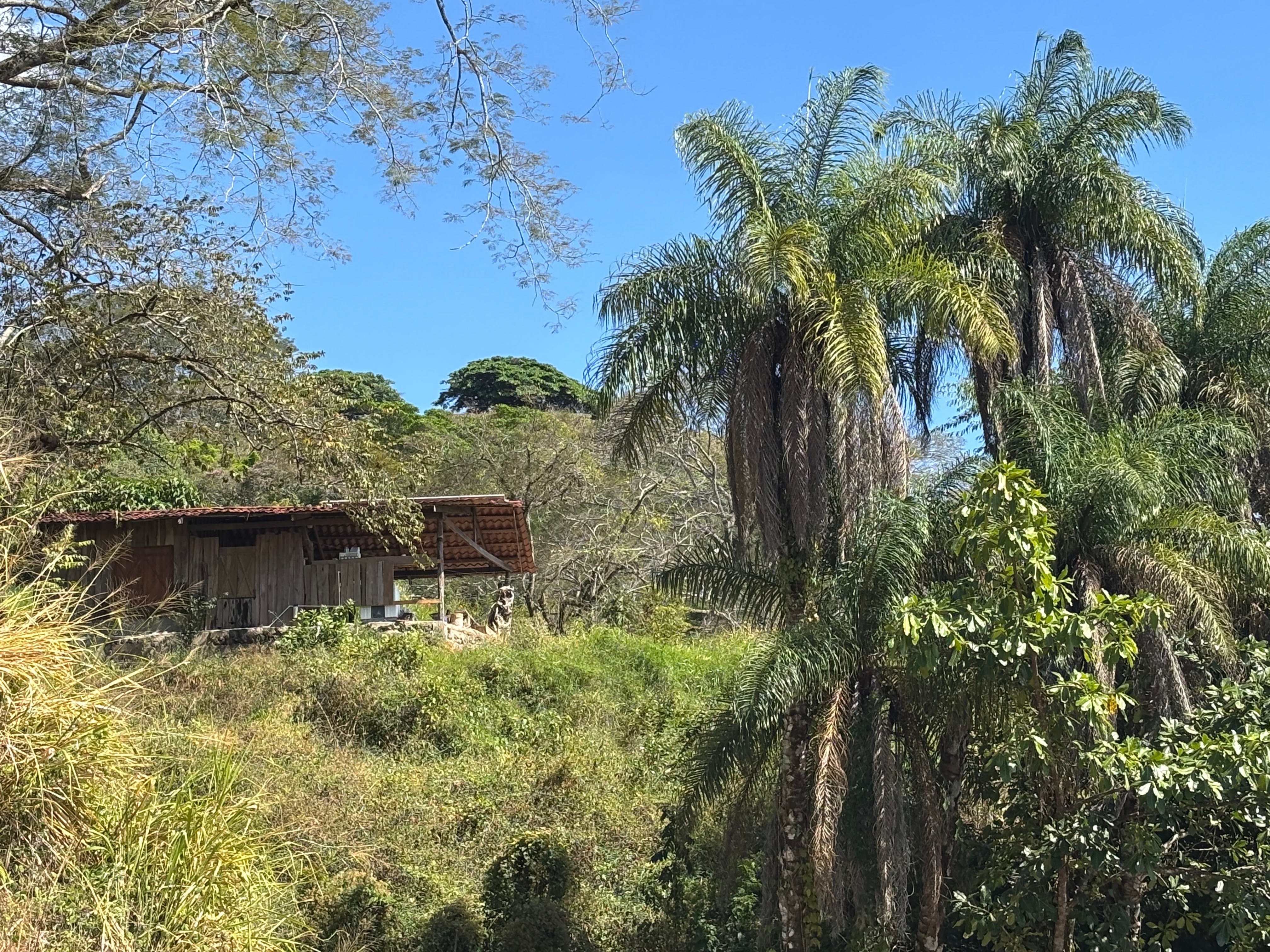
When we bought the property, it included a pig farm: two pig buildings and a small hut where a Nicaraguan family once lived. The pig buildings are gone now, but we kept the hut.
Over time, it’s housed the men who dug our wells and built our road. We added bunk beds, a washer, a refrigerator, and upgraded the solar system. It has one enclosed room, a bathroom, and an open covered area.
I thought of it as a utility space.
A temporary shelter.
The future location of the yoga shala.
I didn’t realize it would also become our courthouse.


Only a few days after returning to Costa Rica from a service trip in the States, we were given less than 24 hours’ notice: a court hearing would take place on our property. The dispute with our neighbors—about their cows crossing our land—was moving forward. This is the next chapter in a story I began in an earlier post, When the Land Isn’t Just Yours.
It had rained all night. Our concern wasn’t just the hearing itself, but whether anyone would make it out afterward. There’s a stretch of public road where the earth seems to swallow gravel whole, making it a slippery, slimy mess. Months earlier, DeWayne had to pull a 4x4 pickup up that road. We voiced our concerns, but it didn’t seem to matter.
Our lawyers don’t share much with us. Their approach is simple: trust us. And we try—but we also do our own research (thank you, ChatGPT), hoping to understand what’s going to happen.
We believed this day was about conciliation. A chance to see whether an agreement could be reached—one that would keep this from going further. DeWayne and I had explored ways we were willing to work with the farmers, ways to be good neighbors.
When we arrived, the neighbors showed up with an entourage. At first, it was all of them, the judge, his assistant, our interpreter, and us. We felt very unsupported and not sure what we were walking into.
Once our lawyers arrived, the judge explained the process of the day. First, we’d see if we were willing to “make peace,” noting that any agreement would leave the door open for future lawsuits on the same issue.
Then it started to rain, and everyone moved up to the hut.
A plastic table and some chairs were unloaded from a pick-up.
Their lawyer stated what they wanted.
Our lawyer stated that we were not willing to give them that.
We thought this was where conversation would happen—where alternatives would be offered. Instead, the energy shifted. Chairs were rearranged. People were asked to wait in the rain. DeWayne was directed to raise his right hand.
And just like that he was sworn in.
DeWayne was their first witness.
It happened so fast, I’m not sure our bodies ever caught up.
Their lawyer didn’t ask questions. He made statements:
“You built a gate.”
“You posted no trespassing signs.”
DeWayne, ever literal, asked, “Is that a question?”
“Yes,” is all he said.
I could feel his brain working overtime, trying to make sense of what was happening.
I sat behind DeWayne, occasionally tapping his shoulder when I wanted him to add something. I was reprimanded. Which makes sense—he was “on the stand.” But it felt absurd and informal in that setting.
It was surreal—was this really happening?
And yet, I was grateful we were outside, on our land holding space for this. I can’t imagine many places where court happens outdoors, around a plastic table, in the rain.
After DeWayne, three more people testified. I couldn’t follow both the Spanish and the translation. So I placed my hand over my heart, closed my eyes, and simply breathed.
First, the man who sold us the land—the former pig farmer. At no point during our purchase did he mention any agreement with the neighbors. His testimony confirmed he’d allowed them passage. What I still struggle to understand is this: if that mattered so much, why wasn’t it included in the sale?
Next came the owner of the coffee farm above us. He testified that the neighbors had used his land before. This mattered. The neighbors insisted there was no other route, yet this farm is closer to their other properties, avoids waterways, reduces time on the public road, and is the route the city wants them to use.
Months earlier when DeWayne had to give them the keys to our gate, he asked why they don’t use the coffee farm. The answer was simple:
“We can’t. It’s not ours.”
The final witness was an 80-year-old man, brought in to speak to the history of the area. He said there had never been problems until we arrived.
When he finished, the judge said he’d have a verdict in 2–3 days.
Everyone stood up.
The table and chairs were folded.
People left.
Our heads were spinning.
DeWayne was frustrated—angry, really. Why didn’t we get to share our side? What about the city’s position? Why didn’t our lawyer ask him anything? What was this “2–3 day verdict”?
We were both confused at what just happened—and what hadn’t.
He was sure we’d lost.
And it is possible we will. I’ve been making peace with that.
Not because it feels fair, but because I know it’s not up to me.
Our lawyer, on the other hand, was pleased. He felt they had clearly demonstrated—through the neighbors’ own testimony—that another route exists, and that we would be given time to present our evidence.
It seems now that our willingness to negotiate wasn’t entertained because this needs to be formalized—resolved once and for all, not patched temporarily.
It’s hard to describe what it feels like to stand inside another country’s legal system, in another language, navigating rules, rhythms, and cultural threads we don’t yet fully understand. And the truth is, we may never fully understand.
It’s been over a month.
We still don’t know what the “2–3 days” meant.
Nothing has changed.
No new information has come.
So we wait.
And I sit with the image that stays with me most:
a court of law convened around a plastic table,
inside a hut that was never meant for this,
on land that is teaching us—again—
what it means to live inside uncertainty,
and stay.
Oh, and as everyone headed out, the road did what we thought it would. Some had to turn around. Thanks to our Land Rover, we didn’t. It felt like a small but meaningful reminder that we’re learning—slowly—how to support ourselves here.